The Extraordinary Pantheon
In summary
The Pantheon was the first Roman temple built for the common people, and it is lit by two openings only: the door and the oculus. What its architects achieved with daylight alone, and why the building still reads as a cultural revolution rather than just a feat of engineering.
Posted on: 10 / 08 / 2023
The Extraordinary Pantheon
Travel to Italy and it won't just be the delicious cuisine or charismatic Italians that wow you, but the impressive ancient architecture of historical buildings and monuments that have stood the test of time. These structures have made it to modern history, surviving wars, acts of god, crusades and generational human beings. The Pantheon is one such building.
What is extraordinary about the Pantheon is not only its architecture or external beauty, but also the fact that it represents a true cultural revolution. It was the first temple built for the common people.
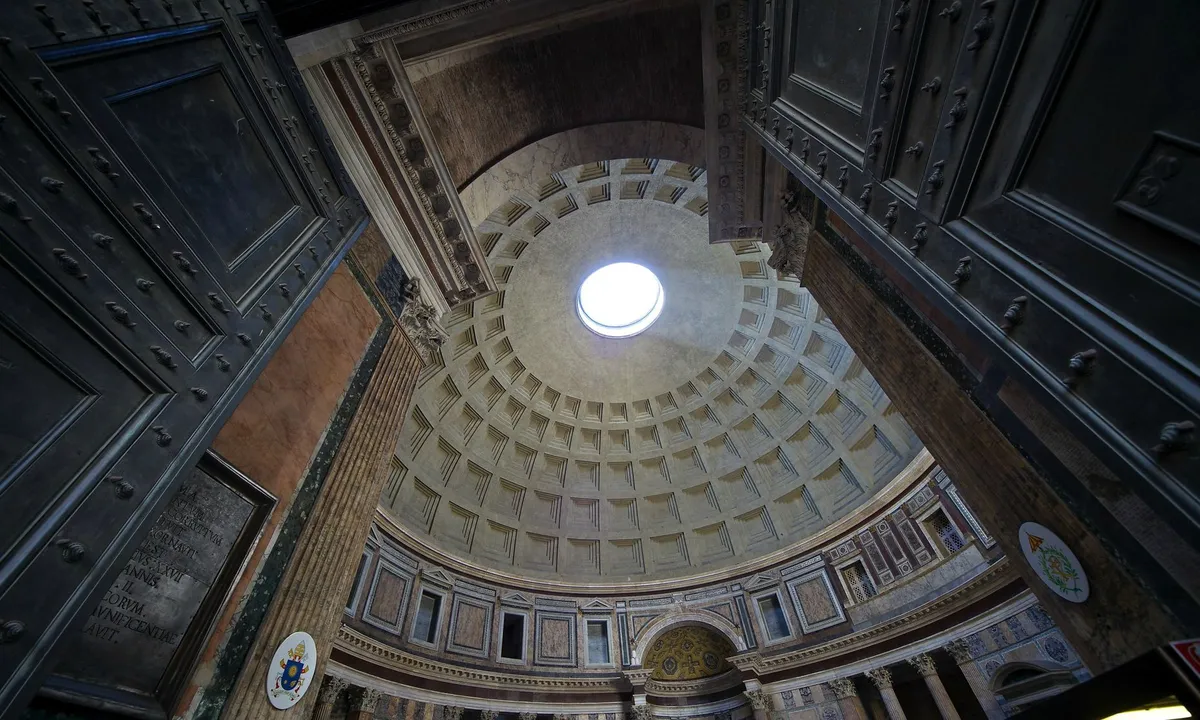
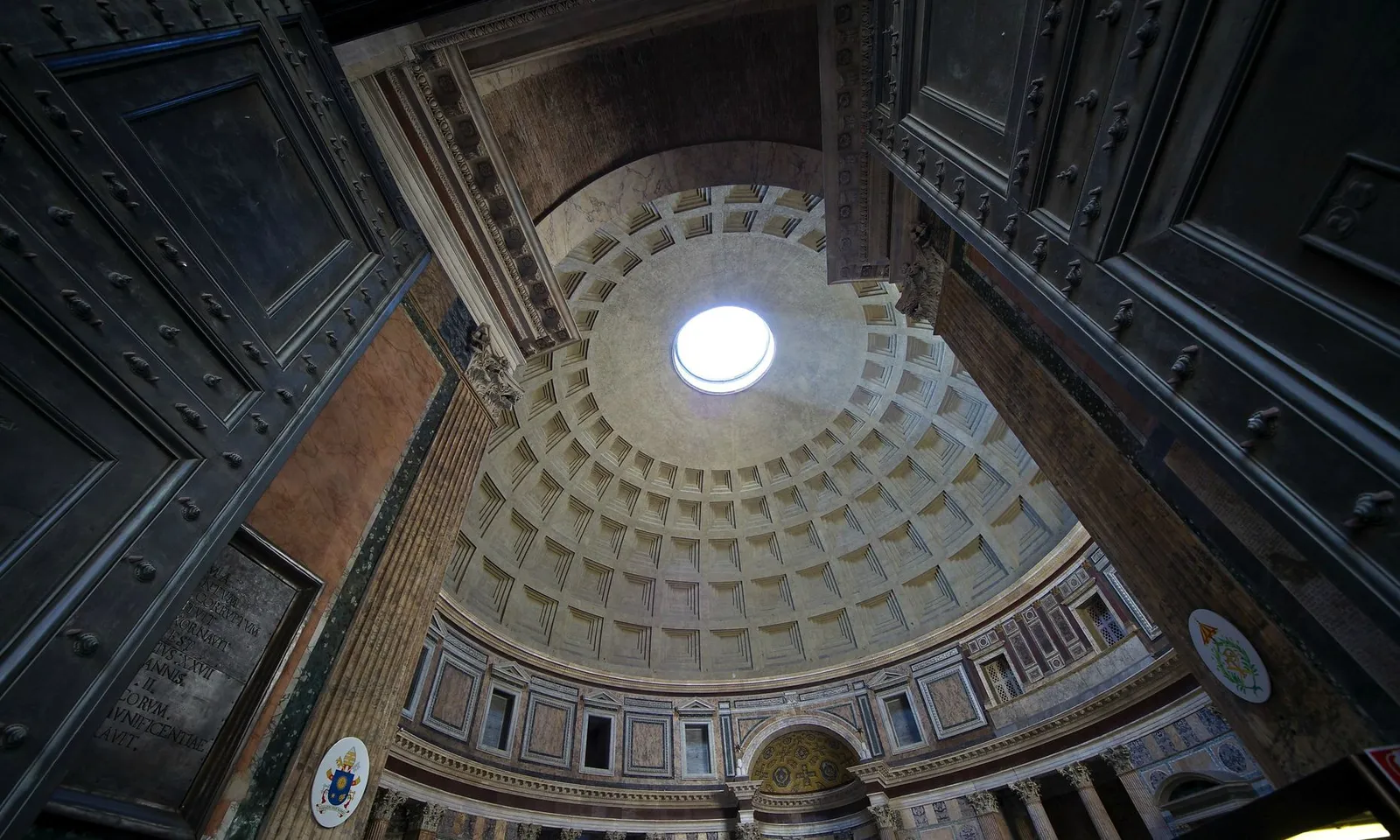
The Pantheon was designed with two sources of light penetrating the 142 square feet of the historical monument. The door and the famous oculus. Architects of the time innately knew the need for natural light, however, the science behind the need was only discovered in the 1990's. It is only through the extraordinary light that the interior of this building comes alive and outshines its harsh exterior.
Today, this could seem an obvious concept, but in ancient times temples were forbidden places, only for vestals and priests. At the centre of the dome, there is a 9 metre diameter hole, the Oculus. A brilliant idea. The Pantheon has no windows, and the only light penetrates from above, streaming down like a river of inner light.
Famous for being one of the most preserved monuments in ancient Rome, the Pantheon boasts one of the biggest brick domes in the history of architecture.
An interesting fact, historians found that when sunlight enters the Pantheon on April 21 (the traditional anniversary of Rome’s founding), it is redirected to the entrance of the monument. As this would likely be the day an emperor would visit, this is unlikely to be a coincidence.
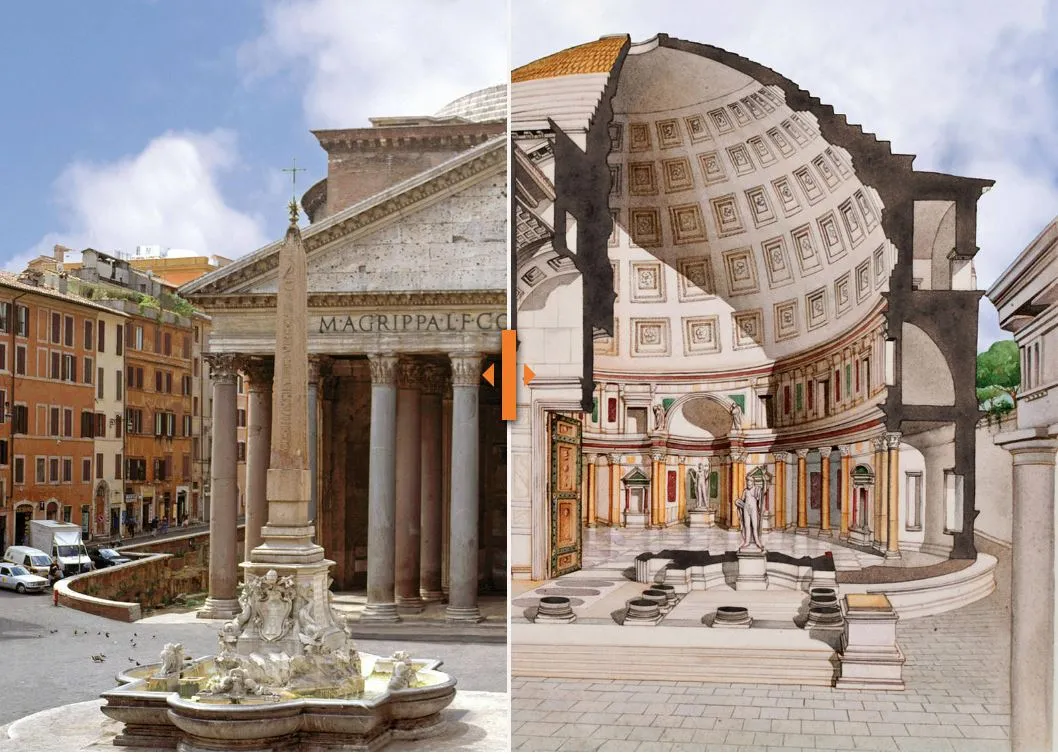
(source: ledvance.com, visionpubl.com)
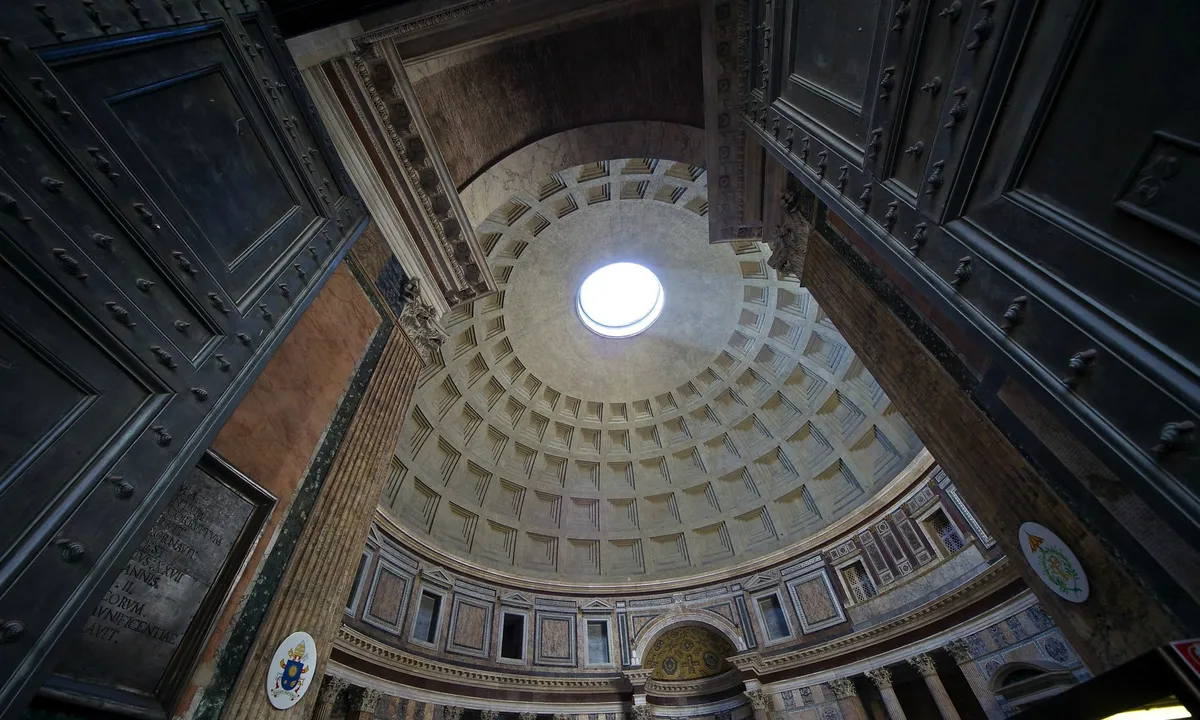
There is no artificial light in the Pantheon.